
**AD21478WYSWZ2A02: A Technical Deep Dive into the Next-Generation System-on-Chip Architecture**
The relentless pursuit of computational efficiency and integration has ushered in a new era of System-on-Chip (SoC) design, epitomized by the advent of architectures like the **AD21478WYSWZ2A02**. This next-generation SoC represents a paradigm shift, moving beyond simply packing more transistors into a die towards a holistic re-imagining of heterogeneous computing, interconnect fabrics, and power management. This deep dive explores the core technical innovations that define this advanced architecture.
At the heart of the AD21478WYSWZ2A02 lies a **radical heterogeneous compute cluster**. Unlike traditional designs with a few high-performance cores, this SoC integrates a diverse array of specialized processing units. This includes not only high-frequency CPU cores and powerful GPU shaders but also dedicated AI accelerators (NPUs), real-time signal processors (DSPs), and hardware-based security enclaves. This configuration allows for **"right-task, right-engine" processing**, dramatically improving performance per watt by offloading specific tasks to optimally designed silicon, thereby reducing the load on general-purpose cores.
A critical bottleneck in complex SoCs has always been on-chip communication. The AD21478WYSWZ2A02 addresses this with a **coherent mesh interconnect fabric**. This next-generation network-on-chip (NoC) acts as a high-speed, low-latency highway, enabling seamless data flow between all compute elements, memory controllers, and I/O interfaces. Its coherent nature ensures that all processors operate on a unified view of memory, simplifying software development and eliminating unnecessary data copies. This fabric is dynamically scalable, allowing bandwidth to be allocated on-demand to prevent bottlenecks and ensure smooth data orchestration across the entire chip.
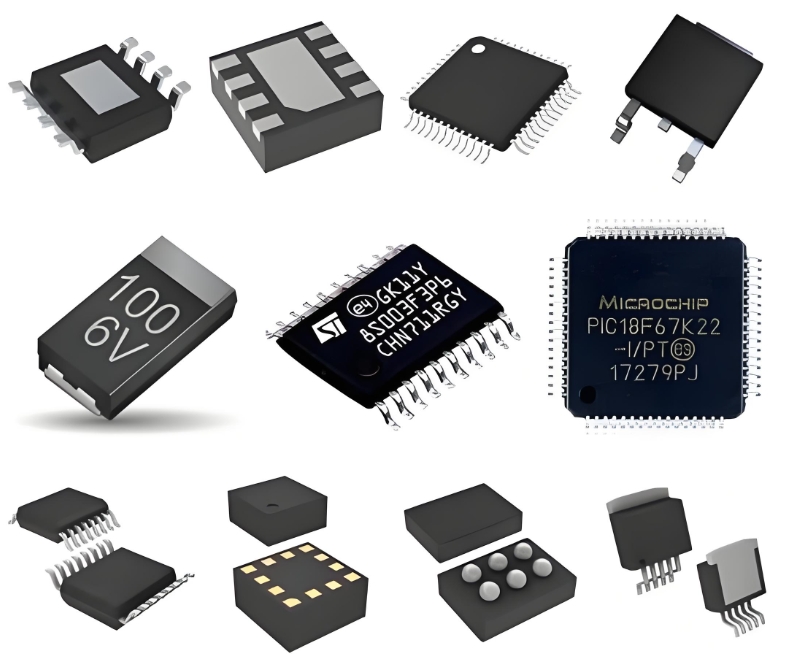
Memory architecture is another cornerstone of its performance. The SoC employs a **unified memory architecture (UMA)** with a multi-level caching hierarchy. All components, from the GPU to the NPU, access a single pool of high-bandwidth memory (HBM3 or LPDDR5X). This eliminates the need for redundant memory subsystems and facilitates zero-copy data sharing between different processors, which is crucial for accelerating AI inference and complex multimedia workloads. The cache hierarchy is intelligently managed, prefetching data to the right place at the right time to minimize latency.
Power efficiency is not an afterthought but a foundational design principle. The AD21478WYSWZ2A02 features a **fine-grained power and thermal management system**. The SoC is partitioned into numerous power islands that can be independently powered on, off, or clock-gated based on workload demands. A sophisticated onboard power management unit (PMU) and thermal sensor network make real-time decisions, dynamically adjusting voltage and frequency (DVFS) to exacting levels. This ensures peak performance is delivered only when needed, drastically reducing idle power consumption and managing thermal output effectively.
Finally, security is baked directly into the silicon. The architecture incorporates a **hardware-rooted trust zone** that provides a secure, isolated environment for sensitive operations like biometric authentication and cryptographic key storage. This, combined with hardware-based encryption engines for data-at-rest and data-in-transit, creates an end-to-end security framework that is resilient to software-level attacks.
ICGOODFIND: The AD21478WYSWZ2A02 is more than an incremental update; it is a blueprint for the future of integrated computing. Its true innovation lies in its **system-level optimization**—the synergistic combination of heterogeneous computing, an agile interconnect, unified memory, and intelligent power management. This holistic approach delivers a leap in performance, efficiency, and capability, setting a new benchmark for what is possible in a single piece of silicon.
**Keywords:** Heterogeneous Computing, Mesh Interconnect Fabric, Unified Memory Architecture (UMA), Fine-Grained Power Management, Hardware-Rooted Security.

